
Concrete Driveway Cost in Minnesota: A Straight Answer for Twin Cities Homeowners
What a concrete driveway really costs in Minnesota — square-foot pricing, thickness, reinforcement, removal, decorative upgrades, and the freeze-thaw details that drive the real number on a Twin Cities estimate.
Pricing a concrete driveway in Minnesota is rarely as simple as a single square-foot number. Two driveways the same size — same neighborhood, same week — can land thousands of dollars apart depending on thickness, base prep, reinforcement, removal, and finish. This guide walks through what a concrete driveway actually costs in the Twin Cities, what drives the line items on a real estimate, and how to compare bids without getting burned.
We're a Hugo, MN concrete contractor pouring driveways across the Minneapolis–St. Paul metro since 1997, so the numbers and details below reflect what we see in the field, not a national average pulled from a calculator.
Quick Answer: Concrete Driveway Cost Range in the Twin Cities
For a standard residential concrete driveway in the Twin Cities, most homeowners should expect a square-foot price in the range typically quoted for the Upper Midwest, with the final number shaped by thickness, reinforcement, base work, and whether the existing driveway has to be removed. Smaller driveways often run higher per square foot because mobilization and minimums get spread over less area. Larger drives, decorative finishes, and engineered slabs run higher because of the added material, labor, and detail work.
Rather than chase a single number, look at the line items below and ask your contractor to break the bid into those same categories. That's the only honest way to compare two estimates.
What Actually Drives Concrete Driveway Cost in Minnesota
1. Slab thickness
Residential driveways in Minnesota are typically poured at 4 inches for standard passenger-vehicle use, stepping up to 5–6 inches where heavier vehicles, RVs, or trailers will park. Thicker slabs use more concrete and more reinforcement, which moves the number. Skimping on thickness to lower the bid is the most common shortcut we see — and the one that causes the most expensive problems three to five winters later.
2. Base preparation
A Minnesota driveway is only as durable as the base under it. Proper prep means stripping organics, importing and compacting Class 5 aggregate to a tested depth, and grading for drainage. Sites with poor soils, high water tables, or old fill cost more to prep because more material has to come out and more aggregate has to go in. A bid that's noticeably cheaper than others is often cutting base depth — which freeze-thaw will find within a few seasons.
3. Reinforcement
Fiber-reinforced mix, welded wire mesh, or rebar all add cost but extend service life. For Twin Cities driveways, we typically specify rebar on a chair grid for driveway slabs and reserve mesh or fiber for lighter walkways. Reinforcement is one of the line items where the cheapest bid often quietly leaves it out.
4. Removal of the existing driveway
If you're replacing an old concrete or asphalt driveway, expect a separate line item for demolition, hauling, and disposal. Removal cost varies with thickness, reinforcement in the old slab, access, and how much hand work is needed around the garage apron, sidewalks, and landscaping.
5. Site access and complexity
Tight lots, steep grades, restricted truck access, and tear-outs around mature landscaping all add time. Long pours that need a pump truck, or sites where the ready-mix truck can't back up to the form, will reflect that in the estimate.
6. Finish and decorative options
A standard broom finish is the most cost-effective and the most reliable choice for a Minnesota driveway. Exposed aggregate, integral color, stamped patterns, and decorative borders all add cost — sometimes substantially. They can look great when done well, but each layer of complexity is another place a less experienced crew can get into trouble.
If you're weighing finish options, our guide to stamped concrete patios for Twin Cities homes covers patterns, colors, sealers, and what stamped concrete looks like a few winters in.
7. Mix design for cold-climate exposure
Driveway concrete in Minnesota needs an air-entrained mix designed for repeated freeze-thaw cycles, a low water-cement ratio, and the right strength for the application. A driveway poured with a basement-floor mix won't last. The mix line on the ready-mix ticket is one of the first things a serious contractor specifies — and one of the first details a low bid will compromise.
The technical background on air entrainment, scaling, and freeze-thaw durability is published by the Portland Cement Association and the American Concrete Institute — both standard references for cold-climate concrete work.
Concrete vs Asphalt Driveway Cost Over Time
Concrete typically costs more up front than asphalt. Over a 25–30 year window, a properly installed concrete driveway usually comes out ahead because asphalt needs more frequent seal coating and earlier replacement in Minnesota's freeze-thaw climate.
For a side-by-side comparison of durability, maintenance, and lifespan, see our concrete vs asphalt driveway guide for Minnesota.
What a Real Twin Cities Driveway Estimate Looks Like
An honest concrete driveway estimate should be itemized, not a single round number on a half-page. At minimum, look for:
- Square footage and slab thickness in inches
- Base prep — material, depth, and compaction method
- Reinforcement — fiber, mesh, or rebar with spacing
- Mix design and target strength (psi)
- Joint layout — control joints and isolation joints
- Finish (broom, exposed aggregate, stamped, colored)
- Removal and disposal of the existing driveway, if any
- Sealing — included or a separate line item
- Permits and locates if required by the city
Common Cost Mistakes Twin Cities Homeowners Make
- Comparing bids on price-per-square-foot alone, without comparing thickness and base
- Skipping reinforcement to save money on a slab that will see truck or trailer loads
- Accepting a bid that doesn't specify the concrete mix
- Pouring late in the fall with no cold-weather protection
- Choosing the lowest decorative finish bid from a contractor who's never poured one
- Skipping sealing on a new driveway in a high-salt area
How Long Should a Concrete Driveway Last in Minnesota?
A properly installed concrete driveway in the Twin Cities should be a 30+ year asset. The driveways we see fail early almost always trace back to one of three things: a base that was never compacted to spec, a mix that wasn't right for cold-climate exposure, or no sealer in a high-salt environment.
If the surface is already scaling or spalling, see our concrete sidewalk repair vs replacement guide — the repair-vs-replace logic is similar for driveways, sidewalks, and patios.
When Replacement Is the Right Call
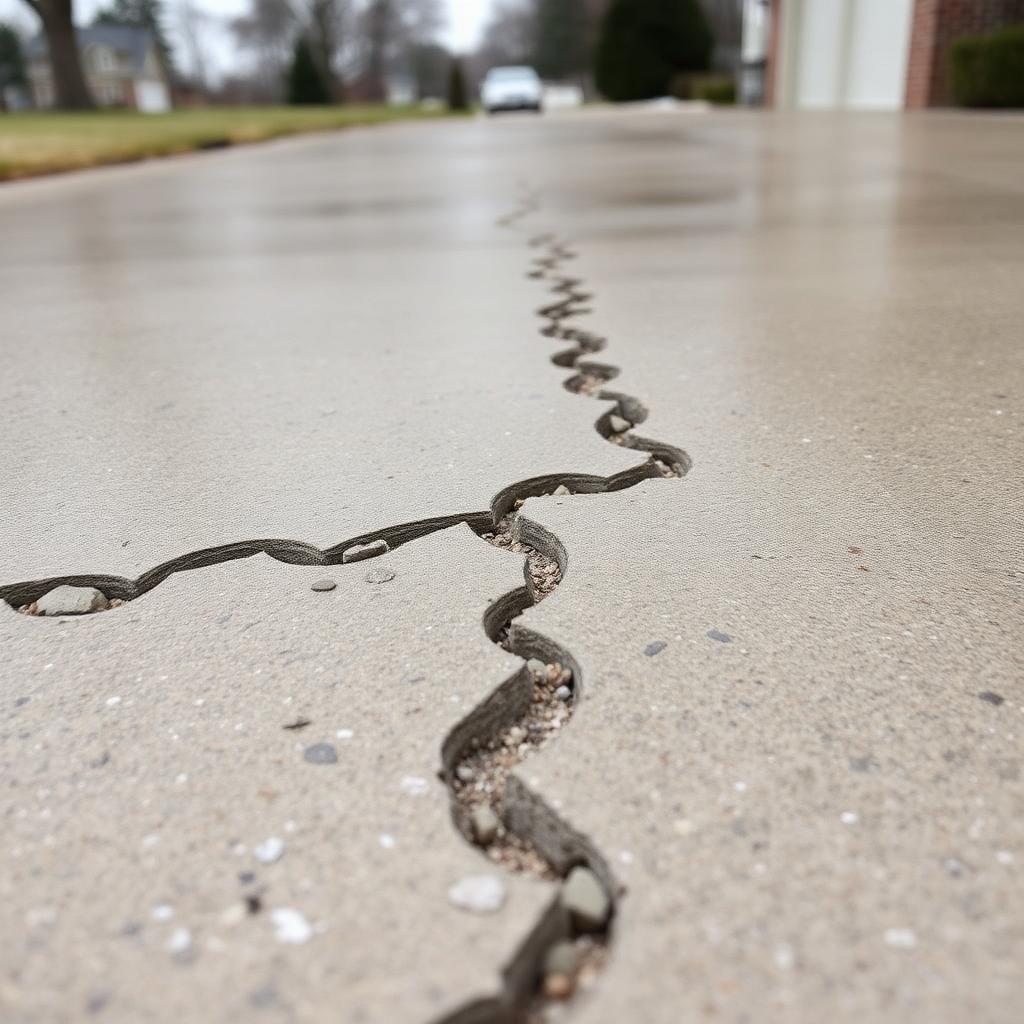
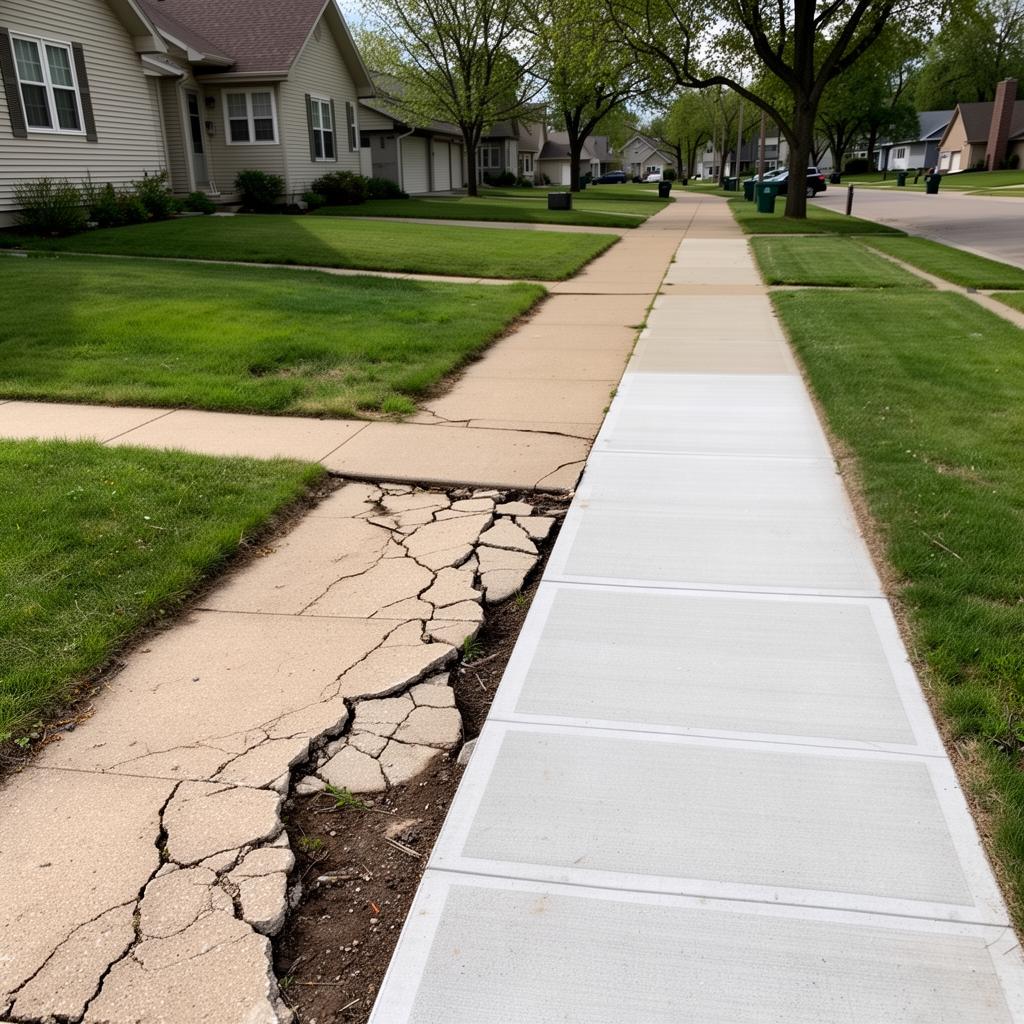
Mudjacking and crack repair extend the life of a driveway that's still structurally sound. Once the base has failed, panels are heaving, or surface scaling has progressed past the top inch, replacement is the honest call. Pouring a new slab over a failing base just buys a year or two.
Service Area: Hugo, MN and the Twin Cities
L'Allier Concrete Inc. pours residential concrete driveways across the Twin Cities — Hugo, Maplewood, White Bear Lake, Forest Lake, Lino Lakes, Blaine, Roseville, Shoreview, Vadnais Heights, Stillwater, Woodbury, Oakdale, North St. Paul, Mounds View, Centerville, Minneapolis, St. Paul, and surrounding communities.
Plan Your Driveway Project
See finished driveway work in our project gallery, review the full scope of our residential concrete services, or contact us for a free estimate. We'll walk your site, talk through thickness and finish, and put a real, itemized number together.
Explore our work on residential, commercial, and industrial concrete projects across the Twin Cities — or see finished work in our gallery.
Frequently Asked Questions
- How much does a concrete driveway cost in Minnesota?
- Concrete driveway cost in the Twin Cities depends on size, thickness, reinforcement, base prep, removal, and finish. Standard 4-inch broom-finish driveways fall in the typical Upper Midwest range; thicker slabs, decorative finishes, and full tear-outs push the number up. The only reliable way to know is an itemized estimate based on your site.
- Is a concrete driveway worth the extra cost vs asphalt in Minnesota?
- For most Twin Cities homeowners, yes. Concrete costs more up front but generally lasts 25–30+ years with low maintenance, while asphalt typically needs sealing every few years and full replacement sooner. Over the life of the driveway, concrete usually wins on total cost of ownership.
- How thick should a residential concrete driveway be in Minnesota?
- 4 inches is standard for passenger vehicles. 5–6 inches with added reinforcement is appropriate where heavier vehicles, trailers, or RVs will park. The right thickness depends on use, not on the bid price.
- Do I need rebar in a concrete driveway?
- For residential driveways in the Twin Cities, we typically specify rebar on a chair grid for durability and load distribution. Mesh and fiber are sometimes used in lighter applications, but for a driveway we want reinforcement that's actually doing structural work.
- Can I pour a concrete driveway in late fall in Minnesota?
- Yes, but with cold-weather protection — heated mix, blankets, and sometimes accelerator. Once overnight temperatures drop and the ground starts to freeze, the window closes. Late-season pours need extra detail, and that should be reflected in the schedule, not skipped.
- How long before I can drive on a new concrete driveway?
- Light foot traffic in 24–48 hours, passenger vehicle in about 7 days, heavy trucks and trailers closer to 28 days. Exact times depend on mix design and weather. Driving on a fresh slab too early is one of the easiest ways to ruin an otherwise good pour.
- Should a new concrete driveway be sealed?
- Yes — especially in Minnesota, where de-icing salts attack any slab that isn't protected. We recommend sealing after the initial cure and resealing on schedule to extend service life.
Plan your concrete project with L'Allier Concrete Inc.
Twin Cities concrete specialists with the experience to do it right the first time. Reach out for a walk-through and an honest plan for your project.
Start Your Concrete Project the Right Way
Twin Cities concrete specialists. Free estimates. Built to last.