
Concrete slab guide for Minnesota homeowners — sizing, thickness, base prep, frost depth, and what a properly poured slab for a shed, detached garage, or home addition actually costs in the Twin Cities.
If you're adding a shed, a detached garage, or a small addition to your home in Hugo, MN or anywhere in the Twin Cities, the project starts with a concrete slab. Get the slab right and the structure on top of it lasts decades. Get it wrong and you'll be chasing cracks, doors that don't latch, and frost heave for as long as you own the building.
Minnesota concrete slabs aren't the same as slabs poured in mild climates. Frost depth, freeze-thaw cycles, expansive soils, and de-icing salt all change what the slab has to do. This guide walks through how concrete slabs for sheds, garages, and additions should be sized, prepared, and poured here in the Twin Cities — and what to look for in a contractor before any concrete shows up.
What a Concrete Slab Actually Is
A concrete slab is a flat, reinforced concrete surface poured on a prepared base. For a shed, it's usually a thickened-edge monolithic slab. For a detached garage, it's a slab with a perimeter frost footing or a separate stem wall and floor. For an addition, it's typically a slab tied into the existing foundation and engineered to handle the load above.
- Monolithic slab — slab and edge thickening poured at once, common for sheds and outbuildings
- Slab with frost footings — perimeter footings dug below frost depth, slab poured separately or with the footings
- Slab-on-stem-wall — concrete stem wall on a footing with the slab poured inside, common for detached garages
- Tied-in addition slab — slab doweled into the existing foundation and reinforced to match the structural plan
Which one you need depends on the size of the structure, the load on top of it, and what the soil and frost conditions look like on your site.
Sizing a Concrete Slab for a Shed in Minnesota
Most residential shed slabs in the Twin Cities fall between 8x10 and 16x20. The slab should be sized to match the shed footprint, with the edge of the slab flush to the wall — not extending past it, where snow and meltwater will sit and freeze against the siding.
- Slab thickness: 4 inches is standard for most sheds; 5–6 inches if you'll store a tractor, ATV, or heavy equipment
- Edge thickening: 12 inches deep around the perimeter for a monolithic slab
- Reinforcement: #3 or #4 rebar in a grid, or a fiber-reinforced mix on smaller pours
- Vapor barrier: 10-mil poly under the slab to keep moisture out of stored items
- Slope: 1/8 inch per foot away from the door so water drains off, not in
Concrete Slab for a Detached Garage
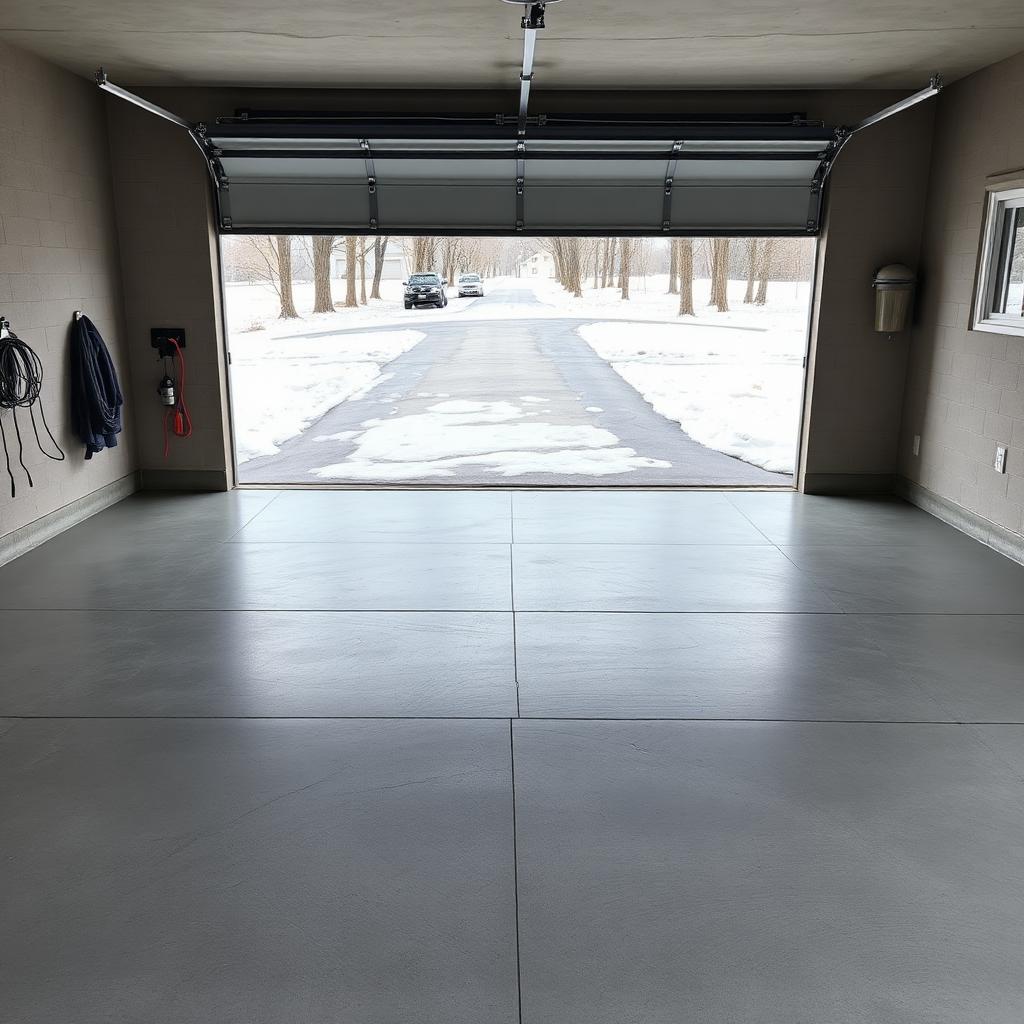
Detached garage slabs are a different category. They carry vehicles, sometimes a hoist, and they have to last as long as the building. A garage slab in Minnesota is generally 4–6 inches thick with #4 rebar in both directions, poured over 4 inches of compacted Class 5 aggregate on a properly stripped subgrade.
Frost protection is non-negotiable. The Minnesota State Building Code uses a frost depth of around 42–60 inches across most of the Twin Cities, depending on jurisdiction. Garage footings have to extend below that depth, or the slab will heave the first hard winter.
For background on frost depth, soil bearing, and slab-on-grade design, the American Concrete Institute (ACI 332 Residential Concrete Code) is the standard a serious residential concrete contractor builds from. The Minnesota Department of Labor and Industry building code page is the authoritative reference for local frost depth and permit requirements.
Concrete Slab for a Home Addition
An addition slab is the most demanding of the three. It has to tie into your existing foundation, carry the framing and roof above, and move with the rest of the house through every seasonal cycle. That means real structural engineering — not eyeballed depth and a couple of bags of rebar.
- Doweled connection — rebar drilled and epoxied into the existing foundation
- Footings sized to the load path and soil bearing capacity
- Insulation under the slab if the addition is conditioned space
- Underslab plumbing roughed in before the pour
- Compaction verified in lifts, not assumed
If your addition plans include heated floors, a slab is also the easiest time to install in-floor radiant tubing — done before the pour, never after.
Base Preparation: The Part That Decides Everything
Most concrete slab failures in Minnesota aren't a concrete problem. They're a base problem. A slab is only as stable as what's under it.
- Strip topsoil and organic material — never pour over sod or loose fill
- Excavate to the right depth for the slab thickness plus the base course
- Place 4–6 inches of compacted Class 5 aggregate in lifts
- Compact each lift to spec, not by passing a plate compactor once
- Re-check grade and slope before the forms close in
- Vapor barrier and edge insulation if the slab requires them
Skip any of these and the slab will tell on the contractor within a couple of freeze-thaw cycles.
How Minnesota Freeze-Thaw Affects Slabs
Twin Cities winters drive water into every pore, joint, and hairline crack on a concrete surface. When that water freezes, it expands. Repeat that 30–50 times a winter and an under-spec'd slab starts spalling, scaling, and lifting. That's why concrete poured here uses an air-entrained mix — microscopic bubbles in the cement paste give freezing water somewhere to go.
- Air-entrained mix engineered for Minnesota freeze-thaw exposure
- Properly cut and sealed control joints so cracks form where you want them
- Curing compound or wet curing to protect the surface during set
- Penetrating sealer on the finished slab to resist de-icing chlorides
- Slope and drainage that move snowmelt off the slab, not under it
We cover this in more depth in our guide on concrete vs asphalt driveways in Minnesota — the same freeze-thaw rules apply to shed pads, garage floors, and addition slabs.
Permits and Setbacks in the Twin Cities
Most Twin Cities cities require a permit for a detached garage and for any addition, and many require a permit for a shed over a certain size (commonly 120 or 200 square feet). Setbacks from property lines, easements, and septic systems all affect where the slab can go. A reputable concrete contractor will tell you what's required in your jurisdiction before pouring anything.
What a Concrete Slab Costs in Minnesota
Pricing on a residential concrete slab in the Twin Cities depends on size, thickness, reinforcement, access, soil conditions, and whether footings or a stem wall are involved. The honest answer is that no contractor should give you a real number without seeing the site. Be cautious of phone quotes that promise a flat per-square-foot price without a site visit — the costs that matter (base prep, frost protection, access) aren't visible from a phone.
How to Choose a Concrete Slab Contractor in the Twin Cities
A few things separate a contractor who will pour a slab that lasts from one who won't:
- They walk your site, check soils, and confirm setbacks before quoting
- They're fully insured and OSHA-compliant
- They specify slab thickness, rebar, mix, and base course in writing
- They pull permits where required and coordinate with the inspector
- They cut and seal control joints on time, not days later
- They cure the slab properly and protect it during the first 7 days
If you're vetting concrete contractors, our companion guide on concrete pouring near me in the Twin Cities walks through the questions to ask before signing anything.
Service Area: Hugo, MN and the Twin Cities
L'Allier Concrete Inc. pours residential concrete slabs across the Twin Cities — Hugo, Maplewood, White Bear Lake, Forest Lake, Lino Lakes, Blaine, Roseville, Shoreview, Vadnais Heights, Stillwater, Woodbury, Oakdale, North St. Paul, Mounds View, Centerville, Minneapolis, St. Paul, and the surrounding communities.
Why L'Allier Concrete Inc. for Your Slab
L'Allier Concrete Inc. has been a concrete contractor in Hugo, MN since 1997. Second-generation, fully insured, and OSHA-compliant — we pour shed slabs, garage slabs, addition slabs, and residential flatwork that's built for Minnesota winters, not for a brochure.
Learn more about our residential concrete services, see finished slabs and flatwork in our project gallery, or contact us to request a free estimate for your Twin Cities concrete slab project.
Explore our work on residential, commercial, and industrial concrete projects across the Twin Cities — or see finished work in our gallery.
Frequently Asked Questions
- How thick should a concrete slab be for a shed in Minnesota?
- Four inches is standard for a typical residential shed in the Twin Cities, with a 12-inch thickened edge around the perimeter. If you'll park a tractor, ATV, or other equipment inside, step up to 5–6 inches with rebar reinforcement.
- Do I need footings under a concrete garage slab in Minnesota?
- Yes. A detached garage needs frost-protected footings that extend below the local frost depth — usually 42–60 inches in the Twin Cities. Skipping the footings is the most common reason garage slabs heave and crack after the first winter.
- What goes under a concrete slab?
- Stripped subgrade, then 4–6 inches of compacted Class 5 aggregate placed in lifts. For conditioned space, add a vapor barrier and rigid insulation under the slab. The base course is what keeps the slab flat, dry, and stable over time.
- Can a concrete slab be poured in winter in Minnesota?
- Yes, with the right precautions — heated enclosures, accelerated mixes, insulated blankets, and careful curing. Most residential slabs are poured between April and November in the Twin Cities, but cold-weather pours are possible when scheduling demands it.
- Do I need a permit for a concrete slab in the Twin Cities?
- Detached garages and home additions always require a permit. Sheds typically require a permit once they exceed a size limit set by your city (often 120 or 200 square feet). Setbacks and easements also affect where the slab can go.
- How long before I can build on a new concrete slab?
- Most slabs are walkable within 24–48 hours, frame-ready in 5–7 days, and at full design strength around 28 days. Cold weather extends those timelines. A reputable contractor will tell you when it's safe to load the slab for your specific project.
- Does L'Allier Concrete Inc. pour shed and garage slabs in the Twin Cities?
- Yes. L'Allier Concrete Inc. is based in Hugo, MN and pours shed slabs, detached garage slabs, and home addition slabs for homeowners across the Twin Cities, including Minneapolis, St. Paul, and the surrounding suburbs.
Plan your concrete project with L'Allier Concrete Inc.
Twin Cities concrete specialists with the experience to do it right the first time. Reach out for a walk-through and an honest plan for your project.

Start Your Concrete Project the Right Way
Twin Cities concrete specialists. Free estimates. Built to last.